Salentina: A Rustic Font for Purposeful Design and Branding
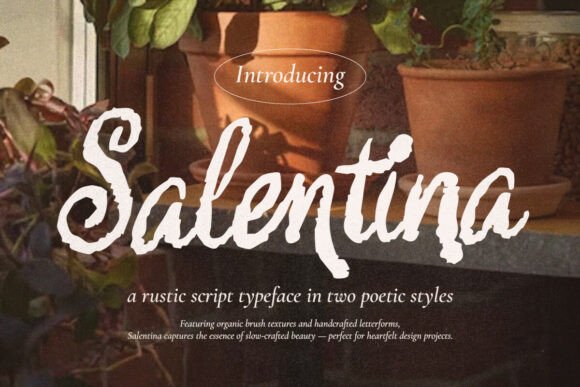
Salentina is a rustic script font that brings warmth, authenticity, and a handcrafted feel to any design. With its two distinct styles—Regular and Slanted—it offers versatility for creative professionals who want to infuse their work with a sense of care and intentionality. Whether you're crafting a logo, designing packaging, or adding a poetic touch to a journal, Salentina can elevate your visual communication in meaningful ways.
Why Salentina Matters in Strategic Design
In an era where visual consistency and emotional resonance are key differentiators, choosing the right font isn't just about aesthetics—it's about alignment with brand identity and audience connection. Salentina’s organic texture and natural flow make it particularly well-suited for brands that prioritize slow living, sustainability, and authenticity. Its handcrafted appearance can evoke trust, intimacy, and a sense of craftsmanship that resonates with modern consumers.
For entrepreneurs and small business owners, using Salentina strategically can help position your brand as thoughtful, intentional, and grounded. It’s not just a font; it’s a silent communicator of values and personality.
Strategic Use Cases for Salentina
Salentina shines in several practical applications where a warm, handwritten feel enhances the message:
- Logos and Branding: Ideal for logos that need to feel personal yet professional. The font’s soft curves and natural variation can add character without overwhelming the design.
- Packaging Design: Perfect for eco-friendly or artisanal products where the packaging should reflect the product’s story and values.
- Quotes and Journaling: Great for motivational quotes, journals, or inspirational content that benefits from a human, handwritten touch.
- Marketing Materials: Useful in newsletters, social media posts, or print materials where a more approachable tone is desired.
- Interior and Web Design: Can be used sparingly in web headers, call-to-action buttons, or interior design elements to create a cohesive, inviting atmosphere.
Each of these use cases requires careful consideration of context and purpose. For instance, while Salentina works beautifully on packaging, it may not be suitable for long blocks of text due to its stylized nature. Always ensure legibility and readability remain intact.
How to Approach Using Salentina Intentionally
Before incorporating Salentina into your designs, ask yourself these strategic questions:
- What is the primary goal of this design? Is it to communicate a message, build brand recognition, or evoke emotion? Align the font choice with that goal.
- Who is the target audience? If your audience prefers clean, modern fonts, Salentina might not be the best fit. However, if your audience appreciates authenticity and craftsmanship, it could be a powerful tool.
- What is the overall tone and style of the project? Salentina’s warm, natural feel complements projects that emphasize simplicity, sustainability, or storytelling.
- Will the font enhance or distract from the message? Use it thoughtfully—too much can dilute the impact. Consider pairing it with a sans-serif font for contrast and clarity.
By answering these questions, you can avoid common pitfalls such as overusing the font or applying it in contexts where it doesn’t serve the design’s purpose.
Risks of Using Salentina Without Strategy
While Salentina has a lot to offer, it’s important to recognize the risks of using it without clear goals or context:
- Lack of Readability: Because it’s a script font, it can be harder to read in large blocks. Avoid using it for body text unless it’s part of a carefully designed layout.
- Misalignment with Brand Identity: If your brand is modern or tech-focused, Salentina might not align with the desired aesthetic, potentially confusing your audience.
- Overuse and Repetition: Using Salentina too frequently across different platforms can lead to visual fatigue or inconsistency in your branding.
- Compatibility Issues: Some digital platforms or software may not render Salentina correctly, especially when used in complex layouts or animations.
These risks highlight the importance of testing the font in real-world scenarios before finalizing its use. Always consider how it interacts with other design elements and whether it supports your broader communication strategy.
Planning Tips for Effective Use of Salentina
To maximize the value of Salentina, follow these planning tips:
- Start with a Clear Brief: Define the purpose of the design, the intended message, and the target audience before selecting the font.
- Test in Context: Apply Salentina to your design and see how it looks at different sizes, on different backgrounds, and alongside other fonts.
- Limit Usage: Reserve Salentina for headings, logos, or short phrases rather than long paragraphs. This maintains readability and focus.
- Pair Wisely: Combine Salentina with a complementary sans-serif or serif font to balance style and functionality.
- Stay Consistent: Once you decide to use Salentina, maintain consistent styling across all applications to reinforce brand identity.
These steps will help you avoid common mistakes and ensure that Salentina serves your design goals effectively.
Long-Term Value of Thoughtful Font Selection
The choice of font, like Salentina, isn’t just a stylistic decision—it’s a strategic one that impacts brand perception, user experience, and long-term results. Fonts shape how people perceive your brand, and when used intentionally, they can become a subtle but powerful element of your visual identity.
By selecting Salentina with purpose and understanding its strengths and limitations, you can create designs that resonate deeply with your audience, support your brand’s messaging, and contribute to your overall marketing and communication goals.
Whether you’re a marketer, designer, entrepreneur, or creator, using Salentina with intention can help you stand out in a crowded marketplace by communicating authenticity, care, and a unique brand voice.